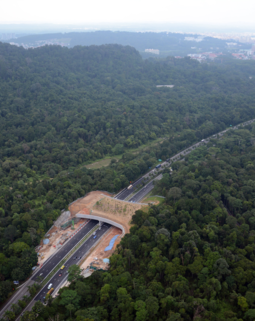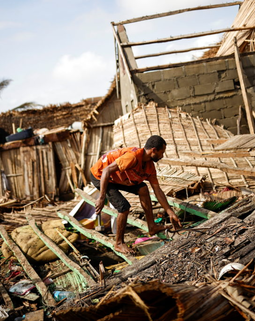


Madagascar is currently facing a unique infrastructure challenge in 2026. As intense tropical cyclones like Fytia and Gezani continue to batter the island’s northern and eastern regions, traditional road-building methods are proving insufficient. In the heart of the Malagasy jungles, where humidity remains at peak levels, the shift toward Eco-Friendly Road Stabilizers has become a matter of both national security and environmental preservation. These innovative solutions allow for the construction of durable transit routes without leaching harmful chemicals into the world's most sensitive ecosystems.
The Challenge Of Tropical Subgrades
Building roads in Madagascar’s "Rainforests of the Atsinanana" requires more than just asphalt. The native laterite soils are highly expansive, meaning they swell when wet and shrink when dry, leading to rapid pavement failure. Conventional stabilizers like lime and cement often crack under the thermal stress and extreme rainfall of the jungle.
By contrast, Eco-Friendly Road Stabilizers utilize organic polymers and enzyme-based formulas that bond soil particles at a molecular level. These bio-chemical agents create a semi-permeable, concrete-like crust that maintains its structural integrity even during the prolonged submergence seen in early 2026. This technology is becoming a staple in the "Infrastructure Resilience Roadmap" designed to reduce the island’s annual disaster-related losses.
Advanced Bio-Enzymatic Solutions
One of the most effective tools currently deployed in Madagascar is the use of non-toxic enzymes. These Eco-Friendly Road Stabilizers work by reacting with the clay fines in the soil to release "pellicular" water, allowing for a much higher degree of compaction.
High-Density Soil Compaction
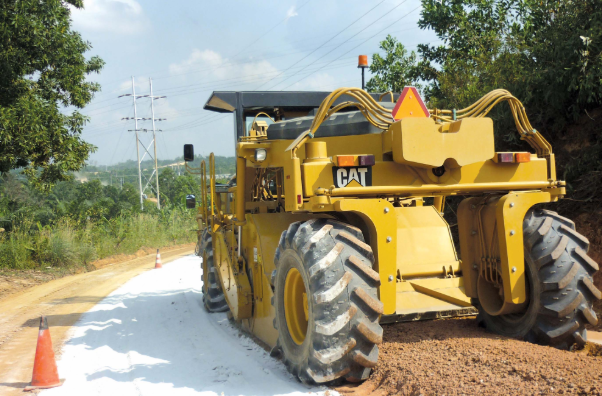
Unlike traditional methods that require hauling in massive amounts of expensive aggregate, these stabilizers allow engineers to use in-situ materials. By treating the native red clay with enzymatic binders, construction crews can achieve a California Bearing Ratio (CBR) that rivals traditional stone bases. This significantly reduces the carbon footprint of road projects by eliminating the need for heavy trucks to transport gravel through fragile forest corridors.
Dust Suppression And Erosion Control
In the dry windows between cyclones, dust can become a major pollutant for nearby flora. Modern Eco-Friendly Road Stabilizers serve a dual purpose by acting as dust palliatives. They create a "sealed" surface that resists the scouring action of heavy tropical downpours, preventing silt from washing into Madagascar’s pristine river systems. For the latest updates on how these technologies are being integrated into regional logistics, many industry experts turn to AfriCarNews for deep-dive reports.
Legal Standards And Sustainability Compliance
As of 2025, Madagascar has updated its MECIE decree (Mise en Compatibilité des Investissements avec l'Environnement), which now places stricter limits on the use of toxic chemicals in road construction. This has paved the way for the mandatory use of Eco-Friendly Road Stabilizers in all projects adjacent to protected areas.
These regulations ensure that as the country expands its "Connecting Madagascar" project, the infrastructure supports—rather than destroys—the biodiversity that defines the Great Red Island. By choosing Eco-Friendly Road Stabilizers, the Ministry of Public Works is ensuring that the roads of the future are as resilient as the landscapes they traverse.
Should bio-based stabilizers be made mandatory for all road projects in tropical zones to prevent chemical runoff? Let us know what you think in the comments!